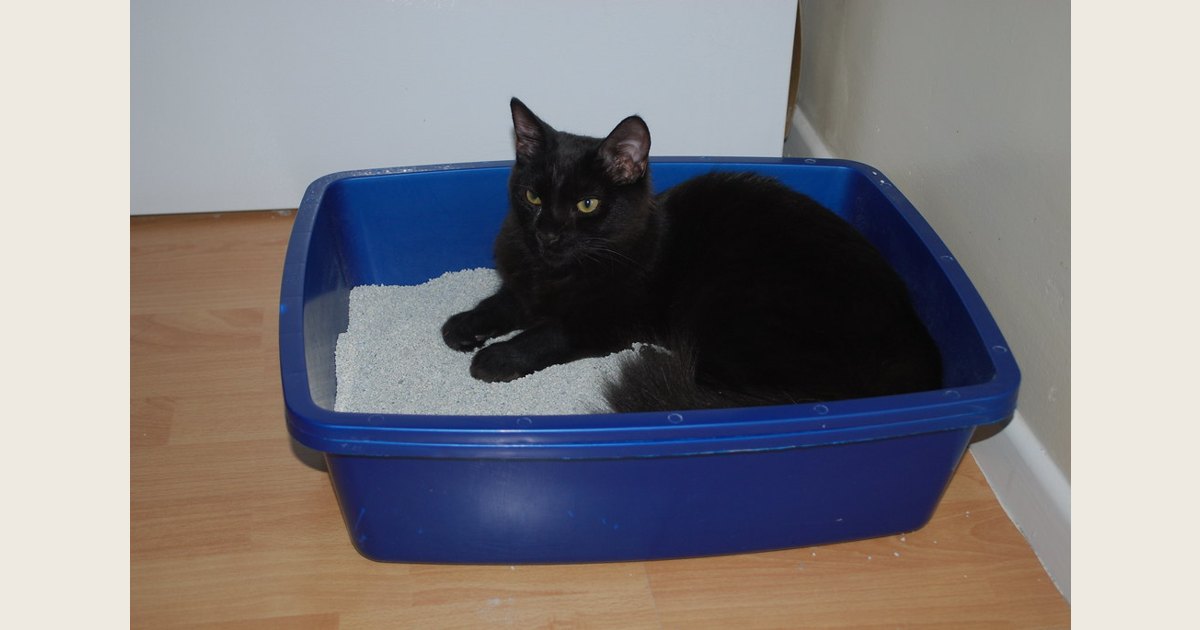
Put a cat litter box in a quiet, low-traffic, easy-to-reach spot where your cat can enter and leave without being surprised, cornered, or forced past another pet. Keep the box separate from food and water, and avoid laundry equipment or other abrupt noise sources. In a home with more than one level, make sure there is a box on every floor. Those priorities reflect guidance from the ASPCA and The Ohio State University Indoor Pet Initiative.
The best spot is not automatically the most hidden one. Choose the room by following your cat’s normal route through the home, then ask whether the box will remain calm, open, and reliably available throughout the day.
Key Takeaways
- A quiet location with a clear way in and out matters more than hiding the box out of sight.
- Keep food and water in a separate area, and avoid places with loud appliances, sudden traffic, or a trapped feeling.
- Use one litter box per cat plus one extra, with a box on every floor of a multilevel home.
- If litter-box avoidance starts or continues, consider both the setup and a veterinary assessment instead of assuming it is only a behavior problem.
Use a four-question placement test
Before committing to a room, test the location from your cat’s point of view. The ASPCA recommends quiet, non-trapping areas where a cat can see approaching people or animals and has more than one way out. Ohio State similarly advises a private, calm area with an unobstructed route to the box. Both sources emphasize access, not just concealment.
| Ask this question | A promising answer | Rethink the spot if |
|---|---|---|
| Can my cat reach it at any time? | The route stays open and does not depend on a closed door or gate. | Another person, a pet, or furniture can block access. |
| Will the room stay calm? | The area is private and away from sudden noise. | It is beside a washer, dryer, loud duct, or busy passage. |
| Can my cat leave comfortably? | There is a clear approach and exit, with room to avoid other pets. | The box sits in a dead end or a narrow space where a cat can be cornered. |
| Are meals elsewhere? | Food and water have their own area. | Bowls sit right beside the box or in the same small zone. |
A tucked-away closet or cabinet can look tidy to people but fail this test if the door can close, the route is cramped, or another animal can wait at the only exit. You do not need a special piece of furniture to solve that problem. Often, clearing a route or choosing a better corner is the more useful change.
Prioritize quiet, predictable access
A good litter-box location should feel routine rather than startling. Ohio State specifically advises placing boxes in private, calm areas away from appliances or ducts that could abruptly frighten a cat. The ASPCA also lists loud, high-traffic, busy, and intimidating locations, including laundry equipment, as places to avoid (Ohio State; ASPCA).
Avoid the laundry-room default
A laundry room is often chosen because it is out of the way for people. It is not automatically a good default for a cat. The sound, vibration, and unexpected start of a machine can make the room less predictable, and a closed door can turn a usable box into an unavailable one. If laundry equipment is the main option, assess it during the times the machines actually run. A quieter bathroom, spare-room corner, or low-traffic living area may be the better placement if it provides a clear route.
Watch the route, not only the room
A room can be quiet yet still be hard to use. Ohio State advises that the route should not require passing obstacles, furniture, or other pets, while the ASPCA recommends a location where the cat is not trapped and can see people or animals approaching. Think about doorways, baby gates, a dog bed, and the places other cats like to wait. The goal is a route your cat can use without a confrontation or surprise.
Keep food, water, and the box in separate zones
Place food bowls separately from the litter box. That is the ASPCA’s direct recommendation, and it is a practical rule for even a small home (ASPCA, “Litter Box Problems”).
There is no single distance in the cited guidance that works for every floor plan, so do not invent a universal number of feet. Instead, create distinct zones: the box in its calm, accessible location and food and water in a different part of the room or, preferably, another room. A compact bathroom can still work for the box when meals are elsewhere. If the only available area is small, moving the bowls may solve the separation issue without buying a new item.
Plan the number and distribution of boxes
Use one litter box for every cat, plus one additional box. Both the ASPCA and Ohio State give this baseline, and both recommend a box on every level of a multistory home (ASPCA; Ohio State). For one cat, that baseline is two boxes; for two cats, it is three.
The count is only the starting point. A group of boxes that all depend on the same doorway does not help much when that doorway is blocked or intimidating. Start by mapping the floors and everyday routes in your home. Put at least one box on each level, then use the remaining boxes to give cats an accessible alternative rather than putting every option behind one door.
Consider each cat’s mobility, too. Ohio State notes that kittens and cats with mobility difficulty may need boxes with lower sides. A location that requires a difficult climb, a sharp turn around furniture, or a long trip to another floor can be less useful than a simple, easy-to-reach setup.
Make a small home work without creating a dead end
Apartments and small homes do not need a perfect dedicated litter room. They need a location that passes the access test. A bathroom, a quiet bedroom corner, or a low-traffic corner of a living area can work when the route remains open, meals are elsewhere, and the cat is not boxed into a narrow space.
Use this short checklist when space is limited:
- Keep the doorway and path clear instead of storing items around the box.
- Avoid placing the box beside a washer, dryer, or loud heating and cooling vent.
- Do not rely on a closet if its door may be shut or the cat has only one cramped way out.
- Put food and water somewhere separate, even if that means using another wall or room.
- In a multilevel apartment or townhouse, do not make a cat travel to a different floor for every litter-box visit.
A tidy-looking location is not automatically a usable one.
Move or add a box in a practical way
When a location is clearly not working, start by identifying the obstacle: noise, a blocked route, an intimidating pet, food bowls beside the box, or lack of a box on the current floor. The ASPCA says boxes can be relocated or added in new places and notes that putting a box at a repeatedly soiled site can be practical when feasible (ASPCA).
Use that flexibility to make one purposeful adjustment. You might add an accessible box on an overlooked floor, relocate one away from the laundry area, or clear the route to an existing box. Keep food separate and make sure the new location is available consistently. Do not force a cat into the box or use it as a place for punishment; the ASPCA specifically advises against forcing a cat into it.
If you are deciding between moving an existing box and adding one, choose the change that directly fixes the access problem. Moving a box can be enough when the current setup already meets the one-per-cat-plus-one baseline. Adding one makes more sense when the home lacks a box on a floor, an existing route is often blocked, or the household is below that baseline.
When you do not need to buy anything
Not every placement problem calls for another litter box, a cabinet, or a new system. If your household already has the recommended number of boxes and the box itself is usable, try a no-purchase fix first: move food bowls, clear a blocked path, keep an interior door open, shift the box away from a sudden-noise source, or relocate an existing box to a calmer corner.
For routine upkeep rather than location selection, see How Often Should You Change a Cat’s Litter Box? A Realistic Cleaning Schedule. Cleaning and placement are related, but a clean box in a frightening or inaccessible location can still be a problem.
Troubleshoot avoidance before blaming the cat
Persistent avoidance is a reason to look at both the environment and the cat’s health. Ohio State notes that ongoing avoidance may reflect illness or an environmental threat. The ASPCA recommends veterinary evaluation to rule out medical causes, especially when a cat has frequent small urinations, straining, pain, crying, abdominal tenderness, excessive licking around the genital area, or blood in the urine (Ohio State; ASPCA).
Before changing several things at once, check these basics:
- Can the cat reach a box without passing another pet, obstacle, or closed door?
- Is the box away from a washer, dryer, loud vent, or heavy foot traffic?
- Are food and water separate from the litter area?
- Does the home have one box per cat plus one, including a box on each level?
- Has a new avoidance pattern appeared along with any urinary warning signs?
If the answer to the last question is yes, contact a veterinarian rather than continuing to experiment with placement alone. For broader help with stool accidents, see Why Is My Cat Pooping Outside the Litter Box? Causes and How to Fix It.
Frequently asked questions
Can a cat litter box go in a bathroom?
Yes, a bathroom can work if it stays accessible, calm, and separate from food and water. Check that the door will not be shut against the cat and that the route does not become a narrow, trapped-feeling exit. If the bathroom is busy or houses a loud appliance, choose a quieter location instead.
Can I put a litter box next to a washer or dryer?
It is better to avoid that placement. The ASPCA identifies laundry equipment among locations to avoid, and Ohio State advises keeping boxes away from appliances that could abruptly frighten a cat (ASPCA; Ohio State).
How far should the litter box be from food and water?
The cited guidance says to keep food bowls separate from the litter box but does not give a universal measured distance. Use separate zones instead of relying on an arbitrary number: put meals in a different area and keep the litter location calm and accessible.
Can all of my cats’ litter boxes be in one room?
The cited sources give a box-count baseline and access rules, not a single required room layout. If one room leaves a cat trapped, makes every box dependent on one doorway, or allows another animal to block the route, use more than one accessible area. In a multilevel home, keep a box on every level.
Bottom line
Put the litter box where your cat can reach it quietly, use it without being trapped, and leave it comfortably. Separate it from food and water, avoid sudden noise, and make sure the number and floor placement work for every cat in the home. When avoidance persists or urinary warning signs appear, involve a veterinarian instead of treating the issue as a placement puzzle alone.
Featured image: “he sleeps in the litter box” by wolfsavard, licensed under CC BY 2.0. Resized and padded. Illustrative stock photo; no product testing is implied.