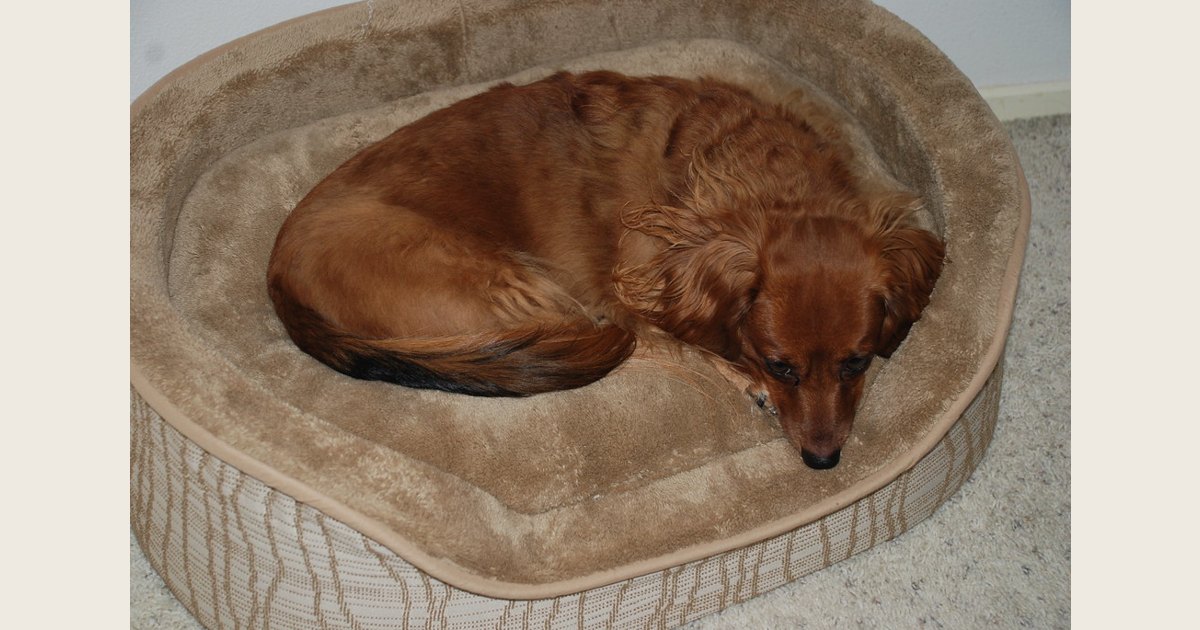
A bedside dog bed for a large dog is usually a separate sleeping spot placed beside your bed—not necessarily a raised platform at mattress height. For many households, a roomy bed on the floor is the simplest starting point: it avoids adding a climb and can be positioned to leave a clear path through the bedroom. A raised dog bed or a way up to the human bed may suit a different setup, but only if the dog can use it comfortably and the structure is stable and appropriately rated.
Before choosing, decide whether your dog will sleep on the floor beside you or share your bed, measure the full footprint, and watch how your dog gets in and out. The right arrangement is the one that fits the room and your dog’s habits without creating a nighttime obstacle.
Key Takeaways
- “Bedside” can mean a dog’s own floor-level bed beside yours or a raised setup; decide which you mean before shopping.
- Measure your dog’s usual sleeping position and the room’s walking clearance, not just the product’s size label.
- Check entry height, support, stability, washable parts, and the manufacturer’s weight guidance.
- If your dog struggles to stand, climb, or jump, ask a veterinarian about access rather than assuming a raised bed or pet stairs are safe.
Start with the kind of bedside setup you want
Most owners are choosing between a dog bed beside the human bed and a dog-accessible surface at or near mattress height. They solve different problems. A floor bed gives your dog a nearby place of their own; a raised platform or stairs-and-ramp arrangement changes how the dog gets onto a higher surface. A taller bed does not automatically make nighttime access easier.
| Setup | What it offers | Main tradeoff |
|---|---|---|
| Floor-level dog bed beside your bed | A separate sleeping place with no step up to the bed itself | Uses floor space and may not suit a dog that insists on sleeping on your mattress |
| Raised dog bed or cot | An elevated sleeping surface that may leave some floor space beneath it | Requires a stable frame, appropriate weight rating, and comfortable entry and exit |
| Ramp or pet stairs to the human bed | A route onto the owner’s mattress, if the dog can use it | Adds equipment and can still involve climbing; it is not the same as a separate bedside dog bed |
Start with a floor-level bed if your main goal is keeping your dog close while giving them their own spot. Consider an elevated platform only when its height, footprint, construction, and access suit your dog and bedroom. If you mean helping your dog onto your mattress, speak with your veterinarian before adding steps or a ramp when mobility is a concern.
Measure your dog and the room before comparing beds
A “large” or “XL” label is not a reliable fit check by itself. Dogs of similar weight can sleep curled up or stretch out, while bed borders and frames reduce the usable surface. Measure the area your dog occupies in their usual sleep position, then compare it with the product’s inside sleeping area and overall outside dimensions. For a fuller fit check, see our guide to checking whether a dog bed is too small.
Next, map the bedroom footprint. Include any bolster or frame, plus space for the dog to turn, step out, and lie down without blocking your route from the bed to the door. Check how drawers, closet doors, and the bedroom door swing. A bed that technically fits against the wall can still make a narrow nighttime path awkward.
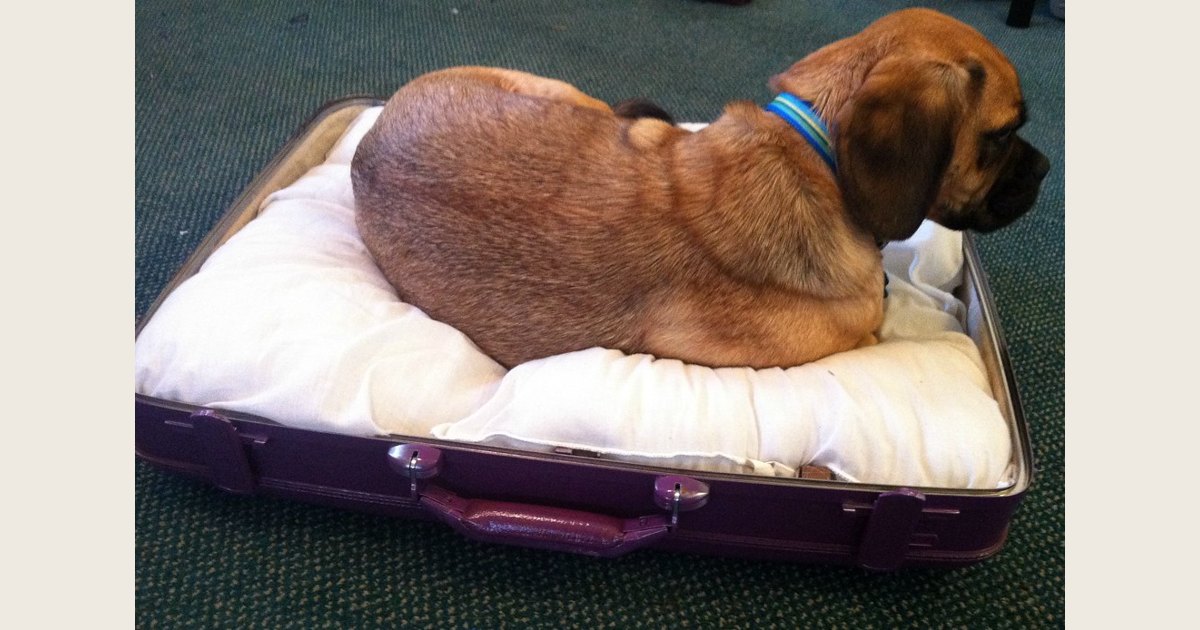
Fit-check cue: Inside sleeping area is the cushioned interior to compare with your dog’s usual sleep footprint; outside footprint is the suitcase’s full edge-to-edge size to compare with available floor space. The photo has no scale and is not a fit recommendation. Illustrative stock photo. Photo: “Upcycled Dog Bed” by Hey Paul Studios, Flickr, CC BY 2.0. Resized and padded.
Check access, support, and stability
A suitable bed should be easy for your dog to enter, leave, and settle into. Look at the entry edge: a high bolster or deep lip may be difficult for a dog that has trouble stepping over it. A flat mattress can offer a simpler exit, while some dogs prefer the boundary of a cushioned bolster. Let your dog’s normal sleeping style guide the shape instead of assuming every large dog wants the same design.
For any raised frame, check the maker’s weight guidance and whether the legs, joints, and sleeping surface feel secure on your floor. Consider how the frame could shift when a large dog turns or climbs in. Do not use a platform that rocks, slides, has exposed sharp edges, or leaves a gap where a paw could get caught. If product details do not clearly explain capacity and construction, ask the manufacturer before relying on it.
If a ramp or stairs are part of the plan, check their incline or step height, width, grip, and position. The route should not slide away or sit in a spot where people trip over it at night. Introduce it gradually while awake and supervise the dog as they learn. If your dog hesitates, slips, or cannot use it without jumping, stop and reassess rather than trying to coax them through.
Make the nighttime route clear
Choose a place beside your bed that keeps the dog nearby but leaves a direct, unobstructed path to the bedroom door. Remove cords and loose items from the route, and avoid placing the bed where it blocks a closet, heater, or door. If the floor is slick, use a secure nonslip mat under the bed or along the path. The PDSA recommends rugs, carpet, or anti-slip mats in the areas a dog with arthritis uses most, rather than requiring coverage of the entire home (PDSA, “Arthritis in dogs”). Make sure a mat itself does not bunch or slide.
Do a nighttime walk-through with the room lights low: can you get out of bed without stepping over the dog or equipment? Can your dog reach the bed and turn around without squeezing between furniture? Leave enough clearance for both of you. Recheck the arrangement after moving furniture or changing the dog’s bed; a once-clear route can become obstructed.
Choose materials and cleaning features you can maintain
Large dogs can take up more surface area, so removable covers and manageable washing instructions matter. Check whether the cover comes off without dismantling a frame, what parts are machine washable, and whether the insert needs spot cleaning or a separate wash. Follow the maker’s label rather than assuming the whole bed can go in the washer. Our dog-bed washing guide explains what to check before washing.
Compare the sleeping surface with your dog’s preferences and any advice from their veterinarian. A firm, flat surface is not automatically right for every dog, and softness alone does not tell you how supportive a bed will be. The PDSA advises owners managing canine arthritis to offer a choice between an enclosed bed and a flat mattress, and notes that memory foam may be kind to joints. That is general guidance, not proof that one material treats pain or suits every dog. For dogs with diagnosed joint problems, ask your veterinarian what features are appropriate; our overview of memory foam dog beds covers practical material considerations.
Introduce the bed and reassess the setup
Place the bed where you plan to keep it and let your dog investigate at their own pace. Add familiar bedding if it fits safely, then notice whether your dog settles, changes position comfortably, and gets back out without difficulty. Avoid forcing a dog onto an elevated surface or using food to lure them into a route they are reluctant to take.
After a few nights, review what is and is not working: Is the bed staying in place? Does your dog actually use it? Is the walking path still clear? Is the cover easy to manage? A rejected bed may be too warm, too enclosed, too small, or simply in the wrong spot. Adjust one element at a time—location, bedding, or layout—so you can tell what helps your dog settle.
If you notice stiffness after resting, limping, difficulty rising, or reluctance to jump or play, do not treat a new bed as a substitute for an exam. The American Kennel Club lists those among possible signs of osteoarthritis and advises veterinary evaluation when it is suspected (AKC, “Osteoarthritis in Dogs: Signs, Symptoms, Treatments”). The PDSA also advises contacting a veterinarian if you notice arthritis symptoms. Ask your vet about safe access and any changes to activity; home layout can make a route more practical, but a bed does not diagnose or treat a condition.
Common questions about bedside beds for big dogs
Should a large dog’s bedside bed be raised to mattress height?
Not necessarily. A floor-level bed directly beside your bed may be the simplest choice if your dog can get down to the floor comfortably and you have enough space. A higher platform adds an access question, so choose it only when its stability, height, size, and the dog’s ability to use it are clear.
Is a ramp better than dog stairs?
There is no one answer for every dog or bedroom. A ramp may still be too steep, slippery, narrow, or awkward to position; stairs require stepping up and down. Consider the dog’s size, movement, surface grip, and the equipment maker’s directions. If your dog has pain, weakness, or a mobility diagnosis, ask a veterinarian before choosing an access aid.
What if my dog will not use the new bed?
First check whether it is large enough for the way your dog sleeps, whether the surface feels familiar, and whether the location is quiet and accessible. Try moving it a short distance or adding familiar bedding, without forcing your dog to climb into it. If the refusal comes with new stiffness, limping, or trouble getting up, contact your veterinarian.
Can an orthopedic bed solve a dog’s joint pain?
A bed can be part of a comfortable sleeping setup, but it should not be presented as a cure or replacement for veterinary care. If you suspect pain or arthritis, arrange an exam and ask which home changes make sense for your dog.
A practical final check
Before settling on a bedside dog bed for a large dog, confirm that the sleeping area fits, the bed or frame is stable, the route is nonslip and clear, and the cover can be cleaned as directed. Start with the simplest arrangement that meets your goal, then watch how your dog uses it. If getting in or out seems difficult, prioritize veterinary guidance over adding height or equipment.
Image credits: Featured image: “Molly the Dachshund Loves her Dog Bed” by Howard O. Young, Flickr, CC BY 2.0. Illustrative stock photo; no product testing is implied.